

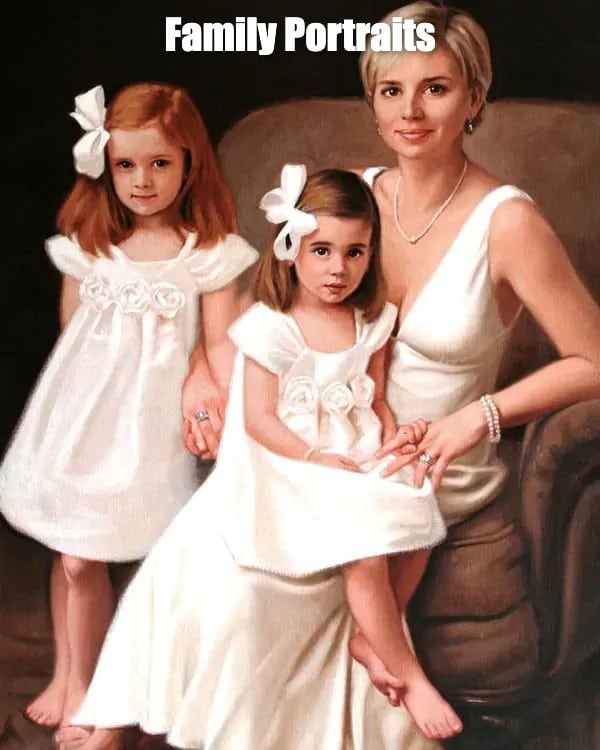
Commissioning a Portrait in Vermont
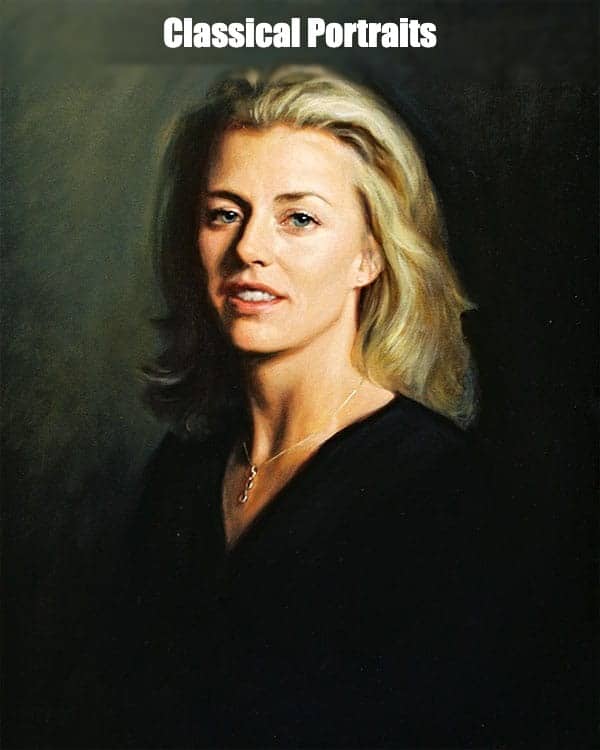
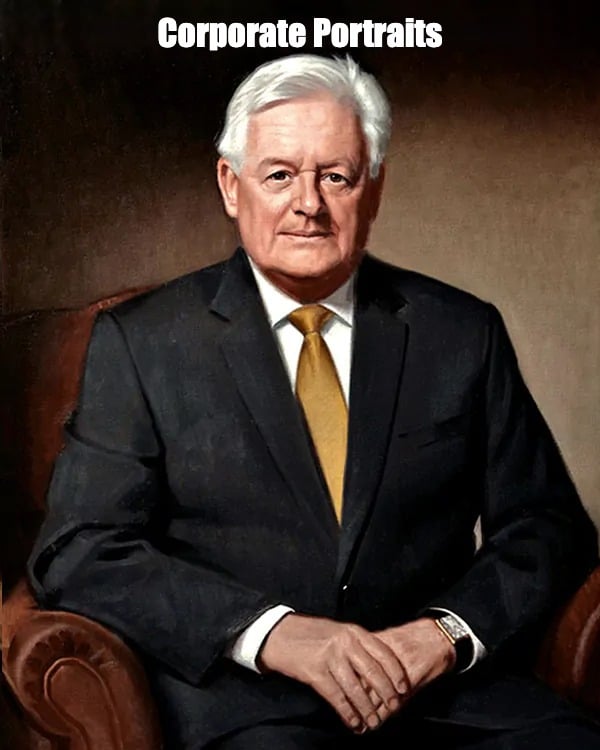
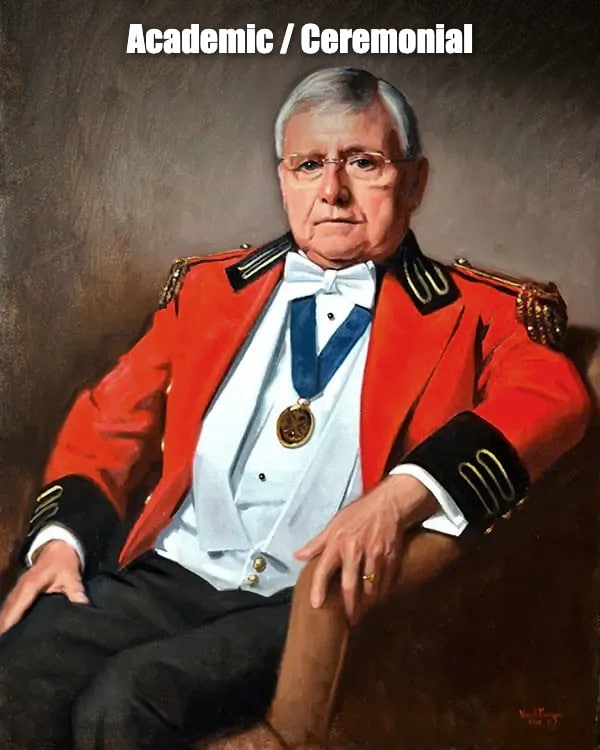
Hazel Morgan provides a bespoke portrait painting service to clients throughout Vermont. An award-winning artist with over four decades of professional experience, Hazel creates hand-painted oil portraits of exceptional quality for individuals, families, corporations, and institutions across the state.
From the boardroom to the family home, Hazel’s portraits have graced the walls of distinguished collectors, university halls, and corporate headquarters throughout Vermont. Each commission begins with a personal consultation and results in a work of enduring artistic merit.
Portrait Artist Vermont Area
As your trusted Portrait Artist Vermont, Hazel Morgan serves portrait clients in Vermont and the surrounding communities. Portraits are shipped directly to your door with professional packaging and full insurance coverage.
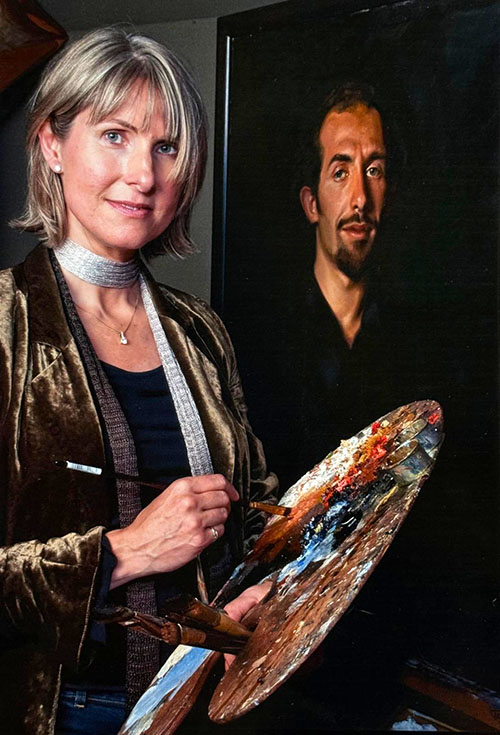
How to Commission a Portrait from Vermont
Commissioning a portrait from Hazel Morgan is a collaborative and enjoyable experience, regardless of where you are located in Vermont. The process has been refined over hundreds of commissions to ensure a seamless experience for every client.
Step 1: Initial Consultation
The process begins with a complimentary consultation - by telephone, video call, or email - during which Hazel discusses your vision for the portrait. This covers the subject, preferred composition, size, background, clothing, and any particular details you would like to include. There is no obligation at this stage.
Step 2: Photographs & References
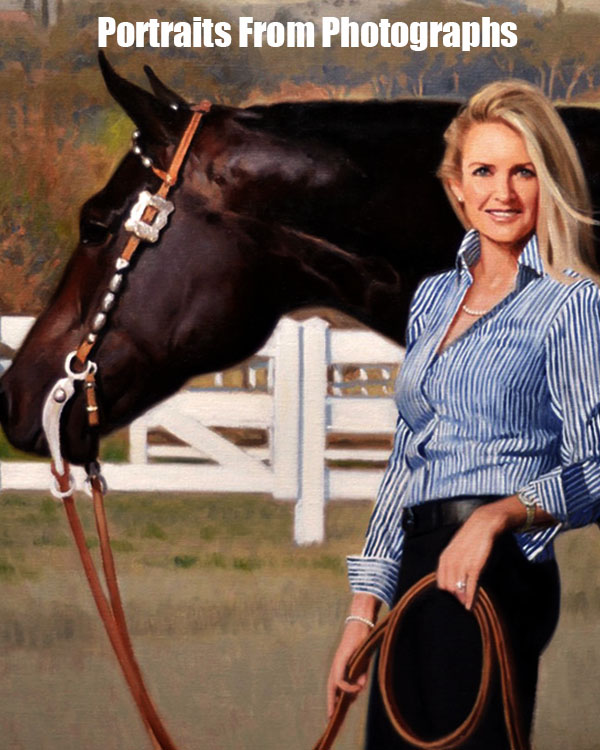
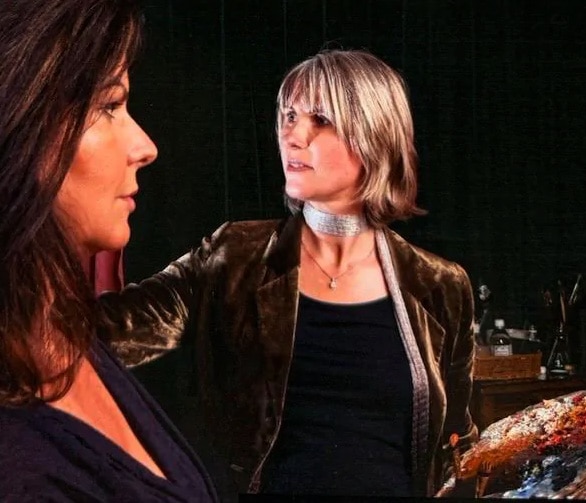
For clients in Vermont, Hazel can work from professional photographs, high-quality personal photographs, or a combination of multiple reference images. She provides clear guidance on the types of photographs that produce the best results. Where feasible, live sittings can also be arranged.
Step 3: The Painting Process
Once the composition is agreed, Hazel begins painting. The process typically takes between six and twelve weeks depending on the complexity of the piece. Clients receive progress photographs at key stages so you can see the portrait taking shape and provide feedback before completion.
Step 4: Delivery & Framing
Completed portraits are professionally packaged for shipping. Shipping and framing costs are provided once the painting is complete. Hazel can also recommend master framers who specialise in fine art framing to complement your finished portrait. Clients in Vermont typically receive their portrait within one to two weeks of completion.
Why Clients in Vermont Choose Hazel Morgan
Hazel Morgan brings a rare combination of artistic excellence, professional reliability, and personal warmth to every commission. Here is what sets her apart:
Over 40 years of professional experience - Hazel has been painting portraits professionally since the early 1980s, amassing a body of work that spans hundreds of commissions for private, corporate, and institutional clients worldwide.
Award-winning recognition - Her work has been exhibited at the Royal Society of Portrait Painters, the Royal Institute of Oil Painters, and other prestigious venues. She is a member of several leading art societies.
A personal, one-to-one service - Unlike studio operations, every portrait is painted entirely by Hazel herself. You deal directly with the artist from first consultation through to delivery, ensuring your vision is faithfully realised.
International shipping expertise - Hazel regularly ships completed portraits to clients across the United States, United Kingdom, Europe, and beyond. Every painting is professionally packaged to arrive in perfect condition.
Complete satisfaction guaranteed - Hazel works closely with each client throughout the painting process. Progress images are shared at every stage, and adjustments are made until you are completely happy with the finished portrait.
Frequently Asked Questions - Portrait Commissions in Vermont
Hazel provides personalized quotations after an initial telephone consultation, during which she discusses your specific requirements. The consultation is complimentary and entirely without obligation. Please get in touch to arrange a convenient time to talk.
Not at all. The majority of Hazel’s commissions are painted from photographs, which makes the process convenient for clients in Vermont and beyond. Hazel provides guidance on the best types of photographs to supply. Live sittings can be arranged where practical.
Most portraits are completed within six to twelve weeks from the start of painting, depending on the complexity of the commission. Hazel provides a realistic timeline during the initial consultation. Rush commissions can sometimes be accommodated for special occasions.
Hazel has extensive experience working with a range of photographic references, including older or lower-resolution images. She can often combine multiple photographs to create a single cohesive portrait. During the consultation, she will advise on whether your available photographs are suitable.
Completed portraits are professionally packaged using custom-built crating and shipped via insured courier directly to your address in Vermont. Shipping and framing are quoted separately after the portrait is completed.
Client satisfaction is paramount. Hazel shares progress photographs at key stages throughout the painting process so you can provide feedback and request adjustments. This collaborative approach means that by the time the portrait is complete, it faithfully reflects your vision.

Why Hazel Loves Vermont
Hazel admires Vermont for its rare, unhurried honesty - a quality she finds woven into the landscape, the light, and the people who call this corner of New England home. The rolling Green Mountains carry a softness in every season, from the pale gold of autumn maples to the blue-grey quiet of a February snowfall, and Hazel finds that this natural rhythm shapes the way her Vermont clients carry themselves. There is a groundedness here that she genuinely treasures, and it shows up in the faces she paints: open, weathered in the best sense, lived-in and full of story.
Hazel loves the warmth she consistently encounters among Vermont's communities, particularly in and around Burlington, where a strong tradition of local arts gives people a real appreciation for handcrafted, considered work. The Fleming Museum of Art at the University of Vermont has long nurtured that culture of looking closely and valuing the human touch, and Hazel feels a quiet kinship with that spirit every time she works with a client from the area. People here tend to arrive at a portrait sitting with thoughtfulness rather than impatience - they understand that a painting takes time, and that the time itself is part of what makes it meaningful.
Hazel also admires the way Vermont wears its history so comfortably. Places like Hildene, the beloved Lincoln family estate in Manchester, remind her that this state has always made room for legacy and memory - two themes that sit at the very heart of portrait painting. When she works with Vermont clients, she often senses that they are thinking not just about themselves but about the generations before and after them, and that awareness gives her portraits a particular emotional depth she finds deeply rewarding to bring to life on canvas.
Hazel also loves the straightforwardness of Vermont people - their tendency to say what they mean and mean what they say. There is no performance to cut through when she sits down to understand who someone is, and for a portrait painter, that kind of honest presence is an extraordinary gift. Vermont, for Hazel, is not just a place she visits for commissions; it is a place that consistently reminds her why she became an artist in the first place.
Ready to Commission Your Portrait?
Begin with a complimentary, no-obligation consultation. Hazel would love to discuss your portrait ideas and provide a personalized quotation for clients in Vermont.
Request a Free ConsultationVermont Counties Hazel Paints Portraits In
Addison, Bennington, Caledonia, Chittenden, Essex, Franklin, Grand Isle, Lamoille, Orange, Orleans, Rutland, Washington, Windham and Windsor.
Towns in Vermont Where Hazel’s Portrait Clients Live
Burlington, South Burlington, Shelburne, Charlotte, Hinesburg, Essex, Williston, Colchester, Jericho, Underhill, Stowe, Waterbury, Morrisville, Craftsbury, Greensboro, Hardwick, Montpelier, Barre, Northfield, Waitsfield, Warren, Middlebury, Cornwall, Weybridge, Bristol, Vergennes, Ferrisburgh, Rutland, Killington, Woodstock, Quechee, Norwich, Hartland, Windsor, Weston, Landgrove, Peru, Manchester, Manchester Village, Dorset, Arlington, Bennington, Shaftsbury, Pownal, Grafton, Chester, Newfane, Putney, Brattleboro, Dummerston, Wilmington and Newport.
Norman Rockwell, Shelburne and the Vermont Portrait
Vermont has an unusually direct relationship with portraiture, and it comes from two things: an early tradition of plain painted likenesses made for farmhouses, and the fact that America’s most famous illustrator spent fourteen years here painting his neighbours.
The land is Abenaki homeland. The French named it - the green mountain - and claimed it, the British took it, New York and New Hampshire both asserted it, and Vermont solved the argument by declaring itself an independent republic in 1777. It stayed one for fourteen years, minting its own coins and running its own post office, and its 1777 constitution was the first anywhere in America to prohibit adult slavery.
Sheep, then dairy, then marble and granite made the economy. Barre granite and Proctor marble went into public buildings across the country, and the carvers who came from Italy, Scotland and Spain to cut them brought serious sculptural skill with them. Hope Cemetery in Barre is the extraordinary result: hundreds of monuments carved by the granite workers for themselves and their own families, including a racing car, an armchair and a full-size soccer ball.
The early painted portraits are the state’s quiet treasure. Itinerant limners worked the valleys from about 1790 to 1850, and the survivors - flat, brightly coloured, unsentimental - hang now in the Shelburne, the Bennington and the Fleming. Vermont farm families commissioned these as a matter of course, which says something about the state’s idea of who deserves a portrait.
Electra Havemeyer Webb assembled the largest gathering of them. Daughter of the great New York collectors of Impressionism, she collected instead cigar-store figures, weathervanes, quilts, decoys, carriages and folk portraits, and from 1947 built the Shelburne Museum to house them - thirty-nine buildings moved onto the site, including a covered bridge, a lighthouse and the steamboat Ticonderoga, hauled two miles overland. It is one of the great American museums and completely unlike any other.
Bennington holds the largest public collection of Grandma Moses. Anna Mary Robertson Moses took up painting at seventy-eight, was discovered in a drugstore window in Hoosick Falls, and by her death at a hundred and one was a national figure. Her Vermont and upstate New York scenes are full of small, precise, entirely convincing figures.
Norman Rockwell moved to Arlington in 1939 and stayed until 1953, and it changed his work. In New Rochelle he had used professional models; in Vermont he began using the people around him - the local postman, the garage mechanic, the schoolteacher, farm children. The Four Freedoms of 1943, which raised something like a hundred and thirty million dollars in war bonds, were painted from Arlington neighbours. Freedom of Speech shows a Vermont town meeting, and the man standing up is a local farmer named Carl Hess.
That is the Vermont point exactly. The town meeting is still how most Vermont towns govern themselves, every first Tuesday in March, and the state’s idea of dignity is not connected to grandeur. It is a good place to think about who is worth painting.
The commissioning geography is compact. Burlington, Shelburne and Charlotte on Lake Champlain. Stowe and the Mad River valley at Waitsfield and Warren. Woodstock, Quechee and Norwich in the upper valley. Manchester, Dorset and Arlington in the south-west, where the summer houses have been in families for a long time. The Northeast Kingdom around Greensboro and Craftsbury. And Grafton, Weston and Newfane.
Institutional portraiture is steady for a small state: Middlebury, the University of Vermont, Dartmouth just across the river, Norwich University - the oldest private military college in the country - Bennington, Saint Michael’s, the University of Vermont Medical Center, the state house at Montpelier with its gold dome and its collection of Vermont governors, and the older Burlington firms.
Second homes account for a good share of the commissions. Vermont has one of the highest proportions of seasonal houses in the country, and a portrait made for a ski house or a lake house is a different picture from one made for a city dining room - usually less formal, often with children or dogs in it, and generally happier for the daylight.
Rockwell said afterwards that Vermont taught him to look at ordinary faces properly. It is not a bad thing for any portrait painter to relearn.