

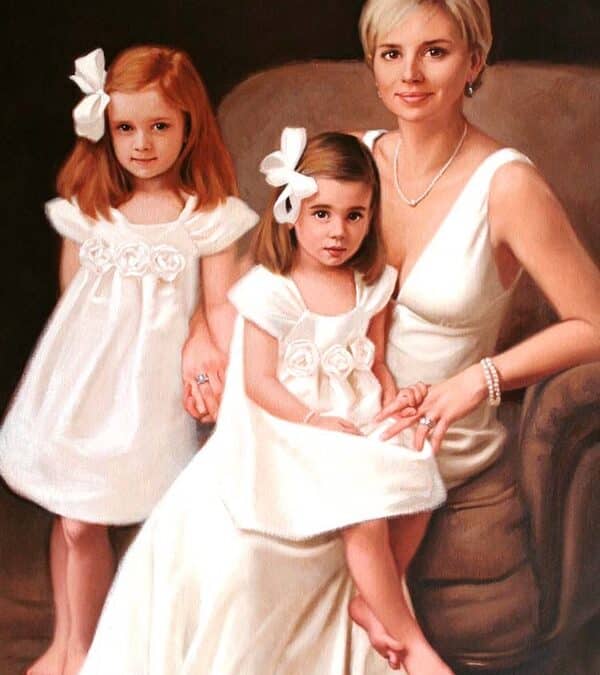
Commissioning a portrait is one of the most personal and rewarding investments you can make in fine art. Whether you are looking to capture a loved one, celebrate a professional milestone, or create a lasting family heirloom, a hand-painted oil portrait offers something no photograph can: a work of art that conveys depth, character, and emotion in a way that endures for generations.
Yet for many people, the idea of commissioning a portrait can feel unfamiliar. How does the process work? What should you expect? How do you choose the right artist? This guide walks you through every step, drawing on more than four decades of professional portrait painting experience.
Why Commission a Portrait?
Portraits have been commissioned for centuries by royalty, scholars, business leaders, and families alike. The tradition endures because a painted portrait achieves something fundamentally different from a photograph. A skilled portrait artist distils the essence of the subject – their presence, their warmth, their authority – into a single, timeless image.
Common reasons for commissioning a portrait include marking a retirement or professional achievement, celebrating a wedding or anniversary, honouring a loved one who has passed, creating a legacy piece for future generations, or simply capturing a child at a particular age before they grow up. Much-loved animals are popular subjects too, from dog portraits to equestrian portraits.
Choosing the Right Portrait Artist
The most important decision in the commissioning process is selecting the right artist. Here are the key factors to consider:
Experience and track record. Look for an artist with a substantial body of completed commissions. An experienced portrait painter will have encountered every scenario – difficult lighting, limited reference photographs, complex group compositions – and will know how to handle them with confidence.
Style and technique. Portrait artists work in many different styles, from photorealistic to impressionistic. Review the artist’s portfolio carefully to ensure their aesthetic aligns with your vision. Pay attention to how they handle skin tones, fabric, and backgrounds.
Professional reputation. Membership of recognised art societies, exhibition history, and client testimonials all provide reassurance about the quality and reliability of the artist. Awards and professional recognition are strong indicators of artistic excellence.
Communication and process. A good portrait artist will be easy to communicate with from the outset. They should be willing to discuss your ideas openly, provide clear guidance on photographs, and keep you informed throughout the painting process.
The Commissioning Process: Step by Step
1. The Initial Conversation
Every portrait begins with a conversation. This is your opportunity to share your vision with the artist: who the subject is, the occasion for the portrait, the intended size and setting, and any particular details you would like included. A good artist will ask thoughtful questions and offer suggestions based on experience.
2. Agreeing the Brief
Once the initial conversation has taken place, the artist will provide a written brief and quotation covering the size of the canvas, the composition (head and shoulders, half length, three-quarter length, or full length), the background treatment, the number of subjects, and the price. A deposit is usually required to secure a place in the painting schedule.
3. Photographs and Reference Material
Most contemporary portraits are painted primarily from photographs, which makes the process convenient for clients who live at a distance from the artist. The artist will provide detailed guidance on the types of photographs that work best – typically well-lit images taken at the subject’s eye level, showing natural expression and posture.
Some artists also offer live sittings, which can produce particularly vibrant and characterful results. A sitting typically lasts one to two hours and gives the artist an opportunity to observe the subject’s mannerisms, colouring, and personality in person.
4. The Painting
The painting process itself varies in length depending on the complexity of the commission, but most portraits take between six and twelve weeks. During this time, the artist builds the painting in layers – starting with a tonal underpainting, then developing the colour, detail, and texture through successive applications of oil paint.
Many artists share progress photographs at key stages, giving you the opportunity to provide feedback and request adjustments before the painting is finished. This collaborative approach ensures the final result meets your expectations.
5. Approval and Delivery
Once the portrait is complete, the artist will share high-resolution photographs for your final approval. Minor adjustments can usually be made at this stage. After approval, the painting is allowed to dry sufficiently for safe handling, then professionally packaged and shipped to your address with full insurance.
What Does a Commissioned Portrait Cost?
Portrait prices vary widely depending on the artist, the size of the painting, and the complexity of the composition. As a general guide, head-and-shoulders portraits by established professional artists typically start from around $3,000 to $5,000, while larger and more complex works can range from $8,000 to $25,000 or more.
It is worth remembering that a commissioned portrait is a one-of-a-kind work of fine art. Unlike a print or reproduction, it is entirely handmade and unique. The investment reflects not only the materials and the hours of skilled work involved, but also the decades of training and experience the artist brings to the canvas.
Framing Your Portrait
A well-chosen frame enhances and protects your finished portrait. Most portrait artists can recommend specialist framers who understand the requirements of oil paintings. Traditional gilt frames remain popular for formal and classical portraits, while simpler mouldings suit more contemporary compositions. The frame should complement both the painting and the room in which it will hang.
Caring for Your Portrait
An oil portrait painted on quality materials will last for centuries with minimal care. Hang the painting away from direct sunlight and sources of heat or humidity. Avoid touching the painted surface. If the painting needs cleaning, always consult a professional conservator rather than attempting to clean it yourself.
A Lasting Legacy
A commissioned portrait is more than a painting – it is a statement of value, a celebration of identity, and a gift to future generations. Whether it hangs in a family home, a corporate boardroom, or an institutional collection, a fine oil portrait carries a sense of permanence and significance that no other medium can match.
If you are considering commissioning a portrait, the best first step is simply to start a conversation with an artist whose work you admire. If the portrait is a gift, a portrait gift voucher lets the recipient take part in choosing the pose and setting. There is no obligation, and you may be surprised by how enjoyable and rewarding the process can be.
Related reading
More articles in the Portrait Journal.