

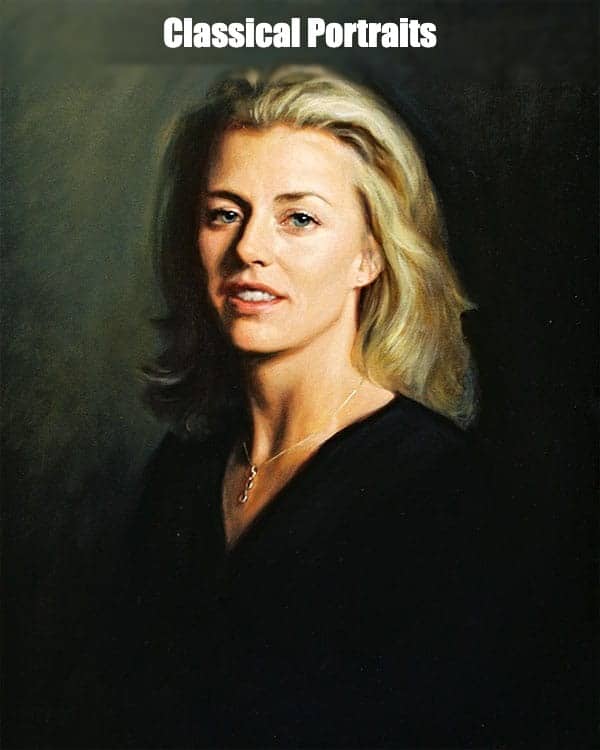
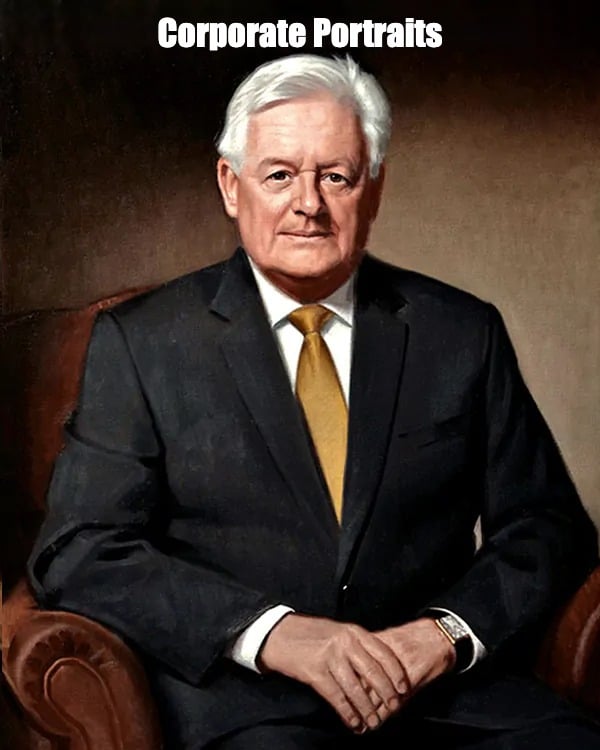
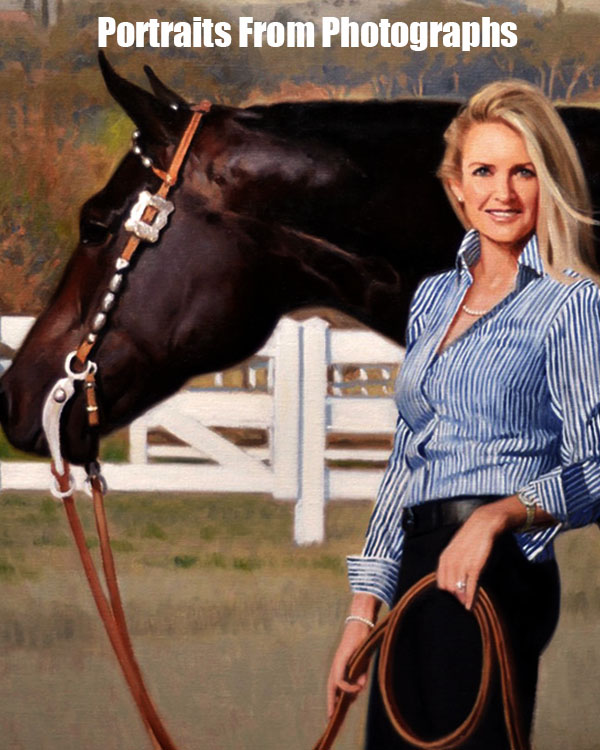
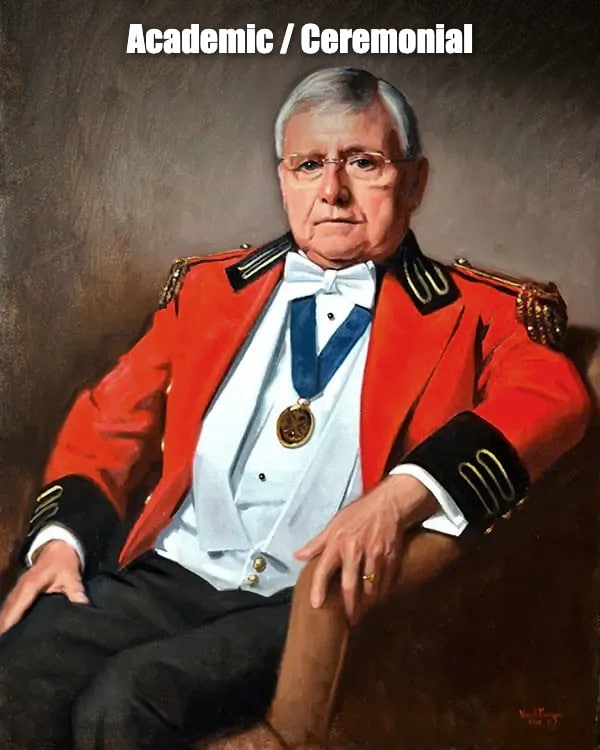
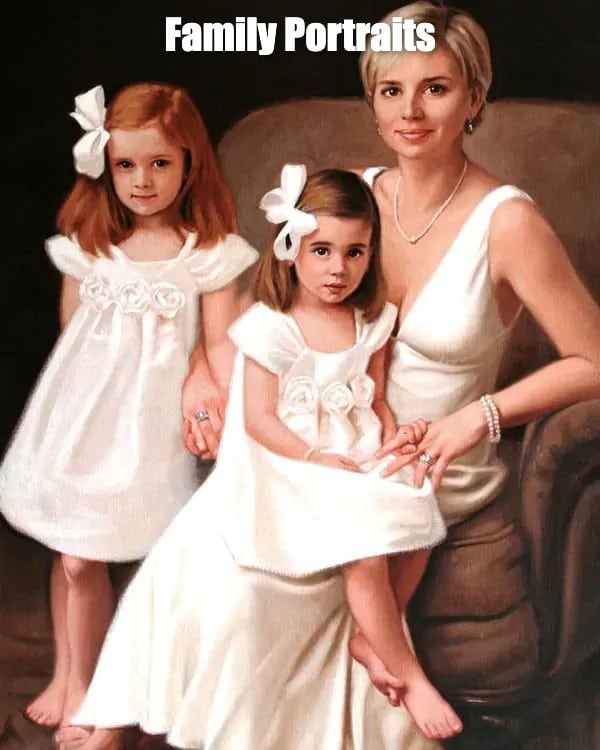
Oil Portraits for Utah Families and Institutions
Clients throughout Utah commission their oil portraits from Hazel Morgan - along the Wasatch Front from Ogden to Provo, in Park City and the Heber Valley, and down to St. George and the red rock country. Hazel paints each one personally, drawing on more than forty years of professional practice.
Utah gives family history a weight few other states do - Salt Lake City is home to the largest genealogical library in the world - and that suggests a kind of commission that suits the state particularly well. Alongside portraits of living families, Hazel paints parents, grandparents and earlier ancestors from old photographs, giving a family’s history a place on the wall.
Serving the Wasatch Front, Park City and Southern Utah
Utah commissions are painted from photographs in Hazel’s studio and shipped, so a portrait for a house in Holladay, a ski house in Deer Valley or a home in St. George is handled in exactly the same way - professionally crated and fully insured.
From First Conversation to Finished Portrait
Talk it through, free of charge
A complimentary, no-obligation consultation - by phone, video or email - covers the subject, composition, size, background and clothing, and where the finished painting will hang. The light in a Utah house - big windows, mountain or desert views - is worth mentioning, because it affects how a portrait should be painted to look right on the wall.
Photographs, old and new
The majority of Hazel’s portraits begin with photographs. For recent subjects she will tell you exactly what to take; for ancestors, she works from whatever survives - faded prints, worn cabinet cards, a single image from a family album - and will say honestly at the outset what can be achieved. Several photographs can be combined into one portrait, and where a sitting in person is practical, Hazel can arrange one.
Painting, progress and delivery
The painting itself usually takes six to twelve weeks, with progress photographs at key stages so you can ask for adjustments. Finished portraits generally arrive in Utah one to two weeks after completion; framing and shipping are priced once the portrait is complete, and Hazel can recommend master framers.
A Painter Working in the Classical Tradition Utah Adopted
When Utah’s first serious painters went to Paris in 1890, they went to learn to draw the figure properly from life. That classical discipline is the tradition Hazel works in:
- More than forty years of professional portraiture and hundreds of commissions for private, corporate and institutional clients.
- Work exhibited at the Royal Society of Portrait Painters and the Royal Institute of Oil Painters.
- Every portrait painted entirely by Hazel, with you dealing directly with her throughout.
- Progress images at every stage, and adjustments until you are happy.
Utah Portrait Questions
Often, yes. Hazel has extensive experience with older and lower-resolution images, and where more than one photograph survives she can combine them. At the consultation she will look at what you have and tell you what is realistic.
Yes. Combining separate photographs into one portrait is routine, whether that means siblings at matched ages or grandparents and grandchildren in the same painting.
Allow six to twelve weeks for painting and up to two weeks for delivery, and get in touch early. Rush commissions can sometimes be accommodated for special occasions.
Professionally crated and sent by insured courier to your door. Shipping and framing are priced separately, after the painting is finished.
Everything else - sittings, sizes, timings - is covered in Hazel’s general FAQ.

Why Hazel Loves Utah
Hazel admires Utah for the sheer honesty of its landscape - the way red rock canyons and sweeping desert light refuse to let anything feel ordinary. There is something in the quality of light here, particularly across the southern reaches of the state, that reminds her of the Old Masters she studied so closely early in her career. That warm, directional glow that rolls across the terrain near Zion National Park has a way of revealing depth and texture in everything it touches - exactly the qualities she chases when she is painting a face. For Hazel, a place that teaches you to look more carefully at the world is a place that makes her a better portrait artist.
Hazel loves the people she meets through her work in Utah, and she means that without a trace of exaggeration. There is a warmth and groundedness to her clients here that she finds genuinely moving. Many of them have deep family roots in the region, and when they commission a portrait, they are not simply asking for a likeness - they are asking her to honour a person who matters profoundly to them. That kind of trust is something Hazel never takes lightly. She has painted families connected to the vibrant arts communities around Salt Lake City, and visits to places like the Utah Museum of Fine Arts have introduced her to a local culture that takes creativity and heritage seriously. That shared respect for art makes every conversation with a Utah client feel like a collaboration rather than a transaction.
Hazel also admires the strong sense of community identity she finds woven through Utah's neighbourhoods and towns. From the tree-lined avenues of the Avenues district in Salt Lake City to the close-knit towns scattered across the rural heartland, people here carry a quiet pride in who they are and where they come from. For a portrait painter, that sense of identity is an extraordinary gift. It means her subjects arrive with a story already alive behind their eyes, and her job becomes one of listening as much as looking.
Hazel also loves returning to Utah because it genuinely feeds her creative spirit in ways that are hard to put into words. The combination of extraordinary natural beauty, sincere people, and a growing appreciation for the visual arts makes it one of the places in the world where she feels most at home as a painter and most grateful for the work she gets to do.
Begin a Utah Portrait Commission
The first consultation is free and without obligation. Share your ideas - or your old photographs - and Hazel will provide a personalised quotation.
Request a Free ConsultationUtah Counties Hazel Paints Portraits In
Beaver, Box Elder, Cache, Carbon, Daggett, Davis, Duchesne, Emery, Garfield, Grand, Iron, Juab, Kane, Millard, Morgan, Piute, Rich, Salt Lake, San Juan, Sanpete, Sevier, Summit, Tooele, Uintah, Utah, Wasatch, Washington, Wayne and Weber.
Towns in Utah Where Hazel’s Portrait Clients Live
Park City, Deer Valley, Old Town Park City, Promontory, Glenwild, Tuhaye, Victory Ranch, Midway, Heber City, Charleston, Kamas, Oakley, Federal Heights, Harvard-Yale, Yalecrest, The Avenues, Sugar House, Holladay, Cottonwood Heights, Sandy, Draper, Alpine, Highland, Cedar Hills, Provo, Orem, Mapleton, Springville, Bountiful, Farmington, Kaysville, Layton, Ogden, Eden, Huntsville, Snowbasin, St. George, Ivins, Santa Clara, Kayenta, Springdale, Moab, Castle Valley, Torrey, Boulder, Escalante, Cedar City, Brian Head, Logan, Providence, Nibley and Hyde Park.
Paris, the Art Missionaries and the Utah Portrait
Utah has one of the most unusual art histories in the United States, and it turns on a single remarkable decision. In 1890 a church sent a group of young painters to Paris, at its own expense, so that they could come home and decorate a temple properly. Very few American states can point to a moment where the sponsorship of serious European artistic training was a matter of institutional policy, and it shaped what Utah painting became.
Long before that, the region held some of the most significant rock art in North America. The Barrier Canyon style figures in Horseshoe Canyon, the Fremont petroglyphs of Nine Mile Canyon, and the panels of San Juan County represent thousands of years of image-making by Ancestral Puebloan, Fremont and later Ute, Paiute, Goshute, Navajo and Shoshone peoples. These are among the oldest surviving depictions of the human figure anywhere on the continent, and they are not incidental to Utah’s artistic identity.
Mormon pioneers arrived in the Salt Lake Valley in 1847 and set about building a society in near isolation. Early painting in the territory was practical: portraits of leaders and families, painted scenery, and decorative work for meeting houses. Ambition outstripped training, and the community was conscious of it.
The response became known as the Art Missions. In 1890 the Church of Jesus Christ of Latter-day Saints sent John Hafen, Lorus Pratt, John B. Fairbanks and later Edwin Evans and Herman Haag to Paris to study at the Académie Julian, on the explicit understanding that they would return to paint the murals of the Salt Lake Temple, completed in 1893. They came back with French academic training and plein-air landscape technique, and the effect on Utah painting was immediate and lasting.
That generation established portraiture and landscape as serious pursuits in the territory. John Hafen in particular became a landscape painter of real quality, and the group’s students carried academic standards into Utah’s schools and studios well into the twentieth century.
The state’s most distinctive painter of the next generation was Minerva Teichert, who studied at the Art Students League in New York before returning to the Intermountain West. She painted large narrative canvases of pioneer and scriptural subjects while running a ranch, and her handling of the figure is confident, muscular and entirely her own.
LeConte Stewart spent a long career painting the Utah landscape and its small towns, including unsparing work made during the Depression, and taught at the University of Utah for decades. Through teachers like Stewart, the discipline of drawing from life stayed central in Utah art education longer than in many other places.
Institutions grew alongside. The Springville Museum of Art traces its origins to a gift of paintings to the local high school in 1903 and became the state’s first museum devoted to the visual arts, an unusual thing for a town of that size. The Utah Museum of Fine Arts at the University of Utah built the state’s principal encyclopaedic collection.
Utah’s landscape then drew outsiders. The national parks and the redrock country of the south attracted photographers and painters from across the country, and Moab, Torrey and Springdale developed into small artistic communities that have little to do with the Wasatch Front but contribute to the state’s visual reputation.
The last three decades have changed the market substantially. Park City and the Wasatch Back have attracted very considerable wealth from outside the state, much of it from technology and finance, and the corridor from Salt Lake City to Provo has become a genuine technology centre in its own right. Both have produced a new generation of collectors with no particular attachment to Utah’s traditional subject matter.
Family remains the central reason for commissioning here. Utah households are often larger and more multi-generational than the national norm, and the impulse to record a family properly, in a way that will be handed down, is unusually strong. Portraits of parents and grandparents, and group paintings of children, are the characteristic commission.
Contemporary Utah portraiture therefore sits between two things: a technically rigorous painting tradition inherited from the Paris-trained Art Missionaries and their students, and a culture that takes family continuity seriously as a matter of course. It is a combination that produces clients who care about draughtsmanship and about permanence, and who commission a portrait expecting it to still be hanging in four generations’ time.