
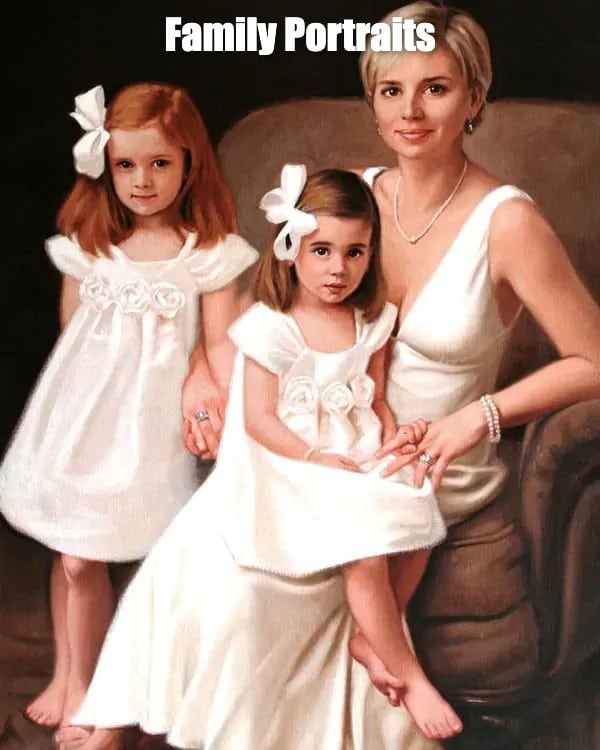
Commissioning a Portrait in Mississippi
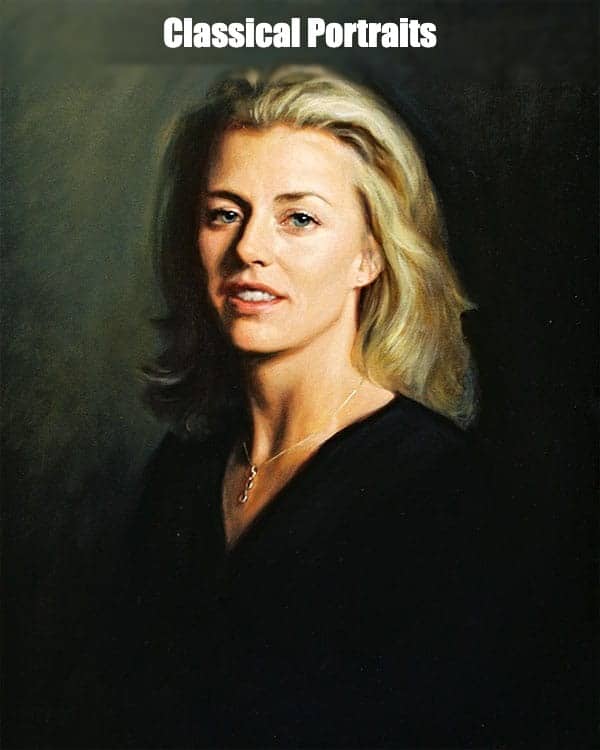
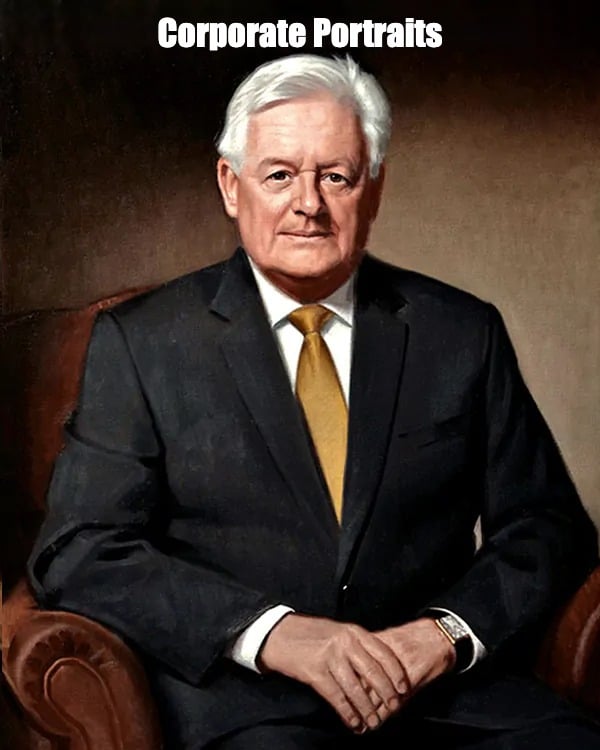
Hazel Morgan provides a bespoke portrait painting service to clients throughout Mississippi. An award-winning artist with over four decades of professional experience, Hazel creates hand-painted oil portraits of exceptional quality for individuals, families, corporations, and institutions across the state.
From the boardroom to the family home, Hazel’s portraits have graced the walls of distinguished collectors, university halls, and corporate headquarters throughout Mississippi. Each commission begins with a personal consultation and results in a work of enduring artistic merit.
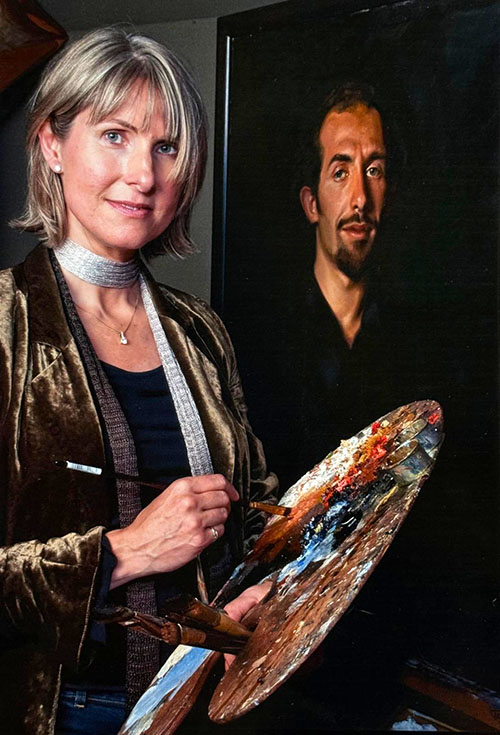
How to Commission a Portrait from Mississippi
Commissioning a portrait from Hazel Morgan is a collaborative and enjoyable experience, regardless of where you are located in Mississippi. The process has been refined over hundreds of commissions to ensure a seamless experience for every client.
Step 1: Initial Consultation
The process begins with a complimentary consultation - by telephone, video call, or email - during which Hazel discusses your vision for the portrait. This covers the subject, preferred composition, size, background, clothing, and any particular details you would like to include. There is no obligation at this stage.
Step 2: Photographs & References
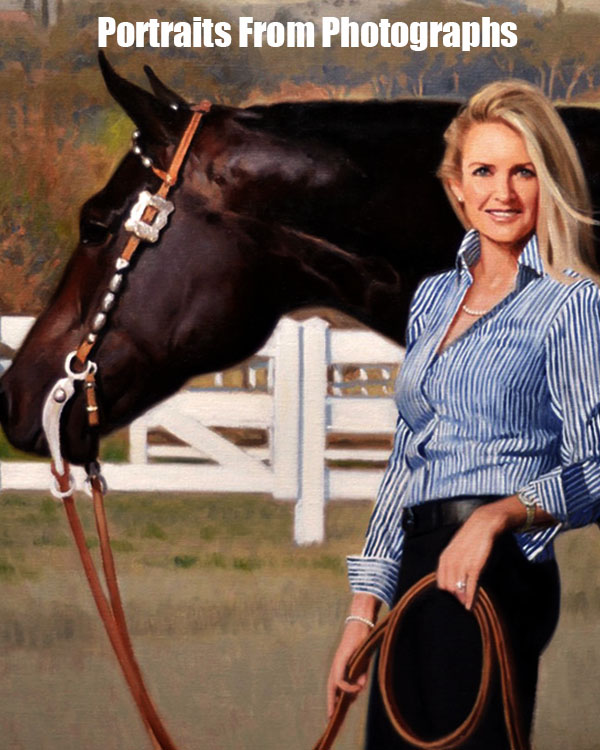
For clients in Mississippi, Hazel can work from professional photographs, high-quality personal photographs, or a combination of multiple reference images. She provides clear guidance on the types of photographs that produce the best results. Where feasible, live sittings can also be arranged.
Step 3: The Painting Process
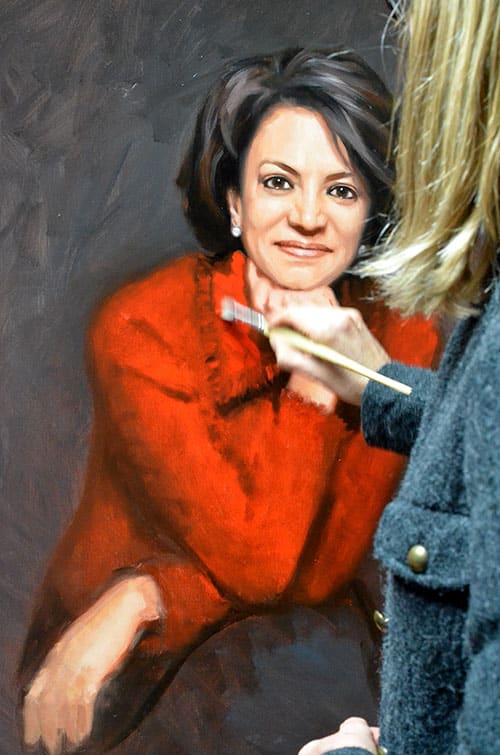
Once the composition is agreed, Hazel begins painting. The process typically takes between six and twelve weeks depending on the complexity of the piece. Clients receive progress photographs at key stages so you can see the portrait taking shape and provide feedback before completion.
Step 4: Delivery & Framing
Completed portraits are professionally packaged for shipping. Shipping and framing costs are provided once the painting is complete. Hazel can also recommend master framers who specialise in fine art framing to complement your finished portrait. Clients in Mississippi typically receive their portrait within one to two weeks of completion.
Why Clients in Mississippi Choose Hazel Morgan
Hazel Morgan brings a rare combination of artistic excellence, professional reliability, and personal warmth to every commission. Here is what sets her apart:
Over 40 years of professional experience - Hazel has been painting portraits professionally since the early 1980s, amassing a body of work that spans hundreds of commissions for private, corporate, and institutional clients worldwide.
Award-winning recognition - Her work has been exhibited at the Royal Society of Portrait Painters, the Royal Institute of Oil Painters, and other prestigious venues. She is a member of several leading art societies.
A personal, one-to-one service - Unlike studio operations, every portrait is painted entirely by Hazel herself. You deal directly with the artist from first consultation through to delivery, ensuring your vision is faithfully realised.
International shipping expertise - Hazel regularly ships completed portraits to clients across the United States, United Kingdom, Europe, and beyond. Every painting is professionally packaged to arrive in perfect condition.
Complete satisfaction guaranteed - Hazel works closely with each client throughout the painting process. Progress images are shared at every stage, and adjustments are made until you are completely happy with the finished portrait.
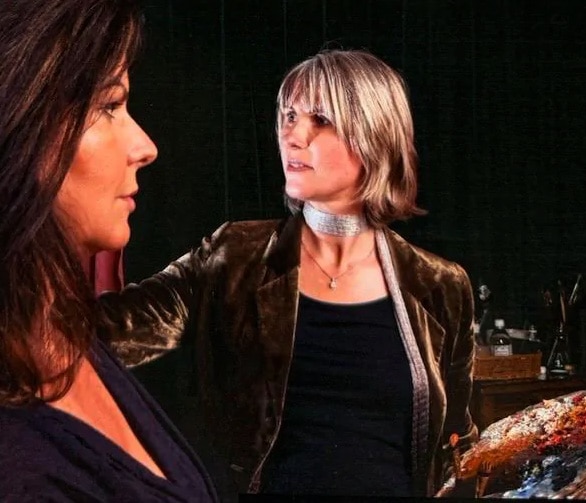
Frequently Asked Questions - Portrait Commissions in Mississippi
Hazel provides personalized quotations after an initial telephone consultation, during which she discusses your specific requirements. The consultation is complimentary and entirely without obligation. Please get in touch to arrange a convenient time to talk.
Not at all. The majority of Hazel’s commissions are painted from photographs, which makes the process convenient for clients in Mississippi and beyond. Hazel provides guidance on the best types of photographs to supply. Live sittings can be arranged where practical.
Most portraits are completed within six to twelve weeks from the start of painting, depending on the complexity of the commission. Hazel provides a realistic timeline during the initial consultation. Rush commissions can sometimes be accommodated for special occasions.
Hazel has extensive experience working with a range of photographic references, including older or lower-resolution images. She can often combine multiple photographs to create a single cohesive portrait. During the consultation, she will advise on whether your available photographs are suitable.
Completed portraits are professionally packaged using custom-built crating and shipped via insured courier directly to your address in Mississippi. Shipping and framing are quoted separately after the portrait is completed.
Client satisfaction is paramount. Hazel shares progress photographs at key stages throughout the painting process so you can provide feedback and request adjustments. This collaborative approach means that by the time the portrait is complete, it faithfully reflects your vision.
Why Hazel Loves Mississippi
Mississippi holds a singular place in Hazel Morgan's artistic imagination, and it's easy to understand why. The state's profound sense of history and its willingness to wear that history openly - beautifully, painfully, honestly - gives portrait work a depth that Hazel finds endlessly compelling. She is drawn to the way the Mississippi River itself shapes the identity of communities along its banks, from the grand antebellum architecture of Natchez to the blues-soaked streets of Clarksdale, where the Delta Blues Museum preserves the faces and stories of legends like Muddy Waters and Robert Johnson. That living connection between people and their heritage is precisely what Hazel seeks to capture in her portraits - the sense that every face carries a whole landscape behind it. The B.B. King Museum and Delta Interpretive Center in Indianola further deepens this feeling, reminding Hazel that Mississippi's people have shaped culture far beyond their own borders.
What captivates Hazel about Mississippi's creative communities is the way art and everyday life genuinely intersect. In Jackson, the Mississippi Museum of Art stands as a cultural anchor, while the Fondren neighborhood buzzes with independent galleries, studios, and the beloved Fondren Arts Market, where local makers and artists gather to share their work with neighbors. Hazel admires the Crossroads Film Festival, which brings storytelling and visual creativity into conversation in ways that remind her of the same impulse driving great portraiture - the desire to truly see another person. The natural landscape adds its own layer of inspiration: the cypress-laden waterways of the Delta, the rolling Loess Bluffs along the Natchez Trace Parkway, and the quiet grandeur of the Ross Barnett Reservoir all speak to a land that rewards close, patient attention.
For Hazel, portrait painting is ultimately about honoring the specific - a particular person, in a particular place, shaped by particular experiences. Mississippi, with its Dockery Farms heritage, its vibrant Mal's St. Paddy's Parade tradition in Jackson, and its communities that hold memory with such fierce tenderness, offers exactly the kind of richly layered humanity that makes her work feel meaningful. Every portrait she creates for a Mississippi client feels like a conversation with something larger than a single face.
Ready to Commission Your Portrait?
Begin with a complimentary, no-obligation consultation. Hazel would love to discuss your portrait ideas and provide a personalized quotation for clients in Mississippi.
Request a Free ConsultationMississippi Counties Hazel Paints Portraits In
Adams, Alcorn, Amite, Attala, Benton, Bolivar, Calhoun, Carroll, Chickasaw, Choctaw, Claiborne, Clarke, Clay, Coahoma, Copiah, Covington, DeSoto, Forrest, Franklin, George, Greene, Grenada, Hancock, Harrison, Hinds, Holmes, Humphreys, Issaquena, Itawamba, Jackson, Jasper, Jefferson, Jefferson Davis, Jones, Kemper, Lafayette, Lamar, Lauderdale, Lawrence, Leake, Lee, Leflore, Lincoln, Lowndes, Madison, Marion, Marshall, Monroe, Montgomery, Neshoba, Newton, Noxubee, Oktibbeha, Panola, Pearl River, Perry, Pike, Pontotoc, Prentiss, Quitman, Rankin, Scott, Sharkey, Simpson, Smith, Stone, Sunflower, Tallahatchie, Tate, Tippah, Tishomingo, Tunica, Union, Walthall, Warren, Washington, Wayne, Webster, Wilkinson, Winston, Yalobusha and Yazoo.
Towns in Mississippi Where Hazel’s Portrait Clients Live
Jackson, Belhaven, Fondren, Eastover, Woodland Hills, Ridgeland, Madison, Flowood, Brandon, Clinton, Canton, Yazoo City, Vicksburg, Natchez, Woodville, Port Gibson, Brookhaven, McComb, Hattiesburg, Petal, Laurel, Meridian, Columbus, Starkville, West Point, Oxford, Taylor, Water Valley, Tupelo, New Albany, Corinth, Holly Springs, Southaven, Olive Branch, Hernando, Senatobia, Clarksdale, Cleveland, Greenwood, Greenville, Indianola, Leland, Belzoni, Biloxi, Gulfport, Ocean Springs, Pass Christian, Bay St. Louis, Long Beach, Diamondhead and Gautier.
Natchez, Walter Anderson and the Mississippi Portrait
Mississippi produced a painter who spent his last years rowing twelve miles to a barrier island alone and drawing everything he saw there. Walter Anderson is the most extraordinary artist the state has given America, and almost nobody outside it had heard of him until after he died.
The land is Choctaw, Chickasaw and Natchez homeland, and the Choctaw remain in Neshoba County. The Natchez people built the mounds at the Grand Village. French settlement began at Biloxi in 1699 and Natchez in 1716; the British and Spanish followed; and by the 1830s the cotton land along the river had made Natchez the richest town per head in America. That wealth rested entirely on slavery, and the Delta counties north of Vicksburg were among the most brutal plantation districts in the South.
What survives at Natchez is the largest concentration of antebellum houses in the United States - Stanton Hall, Longwood, Melrose, Dunleith, Rosalie, Auburn and dozens more, saved partly because the town surrendered without a fight in 1863 and partly because the Pilgrimage Garden Club began opening them to visitors in 1932. Longwood, the octagonal house whose Northern workmen downed tools when the war came, still stands unfinished above its completed basement.
Those houses were hung with portraits, and a good many remain in place. Nineteenth-century Mississippi supported itinerant and resident portraitists in every river town, and the Mississippi Department of Archives and History holds a substantial record of them.
Marie Hull is the state’s major twentieth-century painter. Born at Summit in 1890, trained in Philadelphia and New York and later in Europe, she taught at Belhaven and Millsaps in Jackson for decades and painted Mississippians of every kind - sharecroppers, professors, children, farm women - with a directness that was unusual for the time and place. Her portraits are the best sustained body of figure painting made in the state.
Walter Anderson was something else entirely. Born in New Orleans in 1903 and settled at Ocean Springs, he worked in his family’s Shearwater Pottery, suffered severe mental illness, and from the 1940s rowed a skiff out to Horn Island to live for weeks at a time drawing pelicans, crabs and the light on the water. After his death in 1965 his family opened a locked room at his cottage and found the walls covered floor to ceiling in a painted mural of the Gulf. The room has been moved intact into the Walter Anderson Museum of Art.
The coast has more of this. George Ohr, the self-styled Mad Potter of Biloxi, threw impossibly thin, crumpled, iridescent pots in the 1890s that nobody wanted; thousands were stored in a shed and rediscovered in 1968, and he is now regarded as a genius. The Ohr-O’Keefe Museum, designed by Frank Gehry and finished after Hurricane Katrina destroyed the first attempt, houses them.
Eudora Welty photographed before she wrote. Working for the Works Progress Administration in the 1930s she made several hundred portraits of Mississippians - mostly Black, mostly poor, always named where she could name them - with a plain sympathy that has aged extremely well. Her house in Belhaven is preserved as she left it.
The Mississippi Museum of Art in Jackson holds the largest collection of the state’s art. Oxford has Rowan Oak, Faulkner’s house, and the University Museum with its Theora Hamblett paintings and Greek and Roman antiquities. The Delta has the B. B. King Museum at Indianola and the blues trail markers that run from Tunica to Vicksburg.
Commissions come from a handful of places. Jackson’s Belhaven, Eastover and Fondren, and out to Madison and Ridgeland. Oxford and Starkville around the universities. Tupelo and the north-east. The DeSoto County suburbs of Memphis at Olive Branch and Hernando. Hattiesburg, Laurel and Meridian. Natchez and Vicksburg on the river. And the coast at Ocean Springs, Pass Christian and Bay St. Louis.
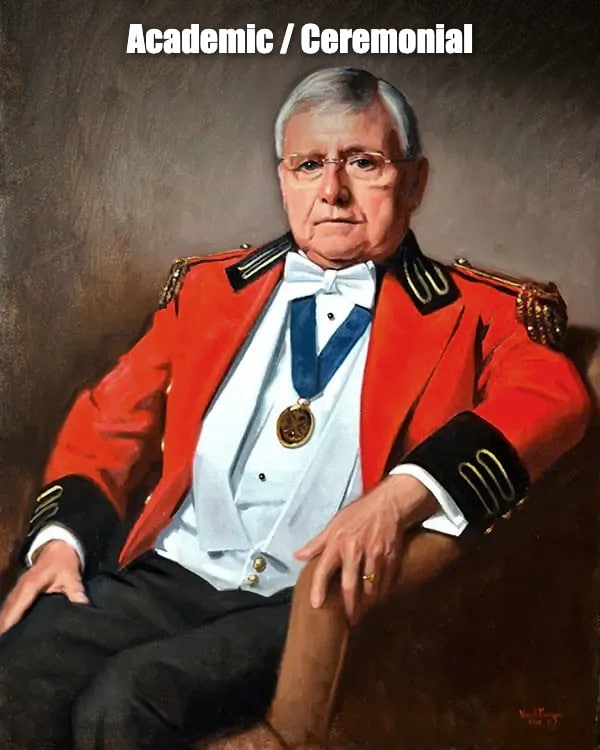
Institutional portraiture is steady: the University of Mississippi, Mississippi State, Southern Miss, Millsaps, Belhaven, Jackson State, Alcorn State, Mississippi University for Women - the first public college for women in America, founded 1884 - the University Medical Center, the state capitol, the federal courts and the older Jackson firms.
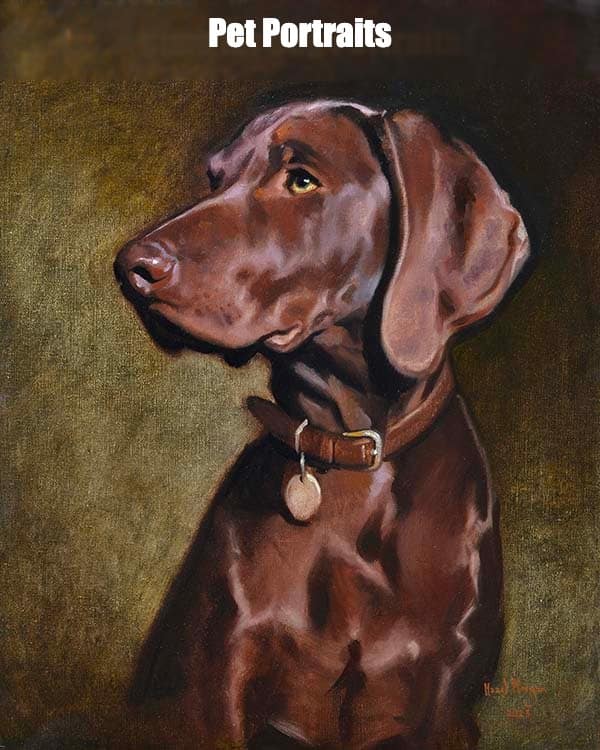
Sporting commissions are common, particularly bird dogs and Delta duck-hunting subjects, and coastal families often want the water in the picture. Anderson would have approved of that last one. He thought the Gulf light was the only thing in Mississippi worth getting right.