


Commissioning a Portrait in Atlanta
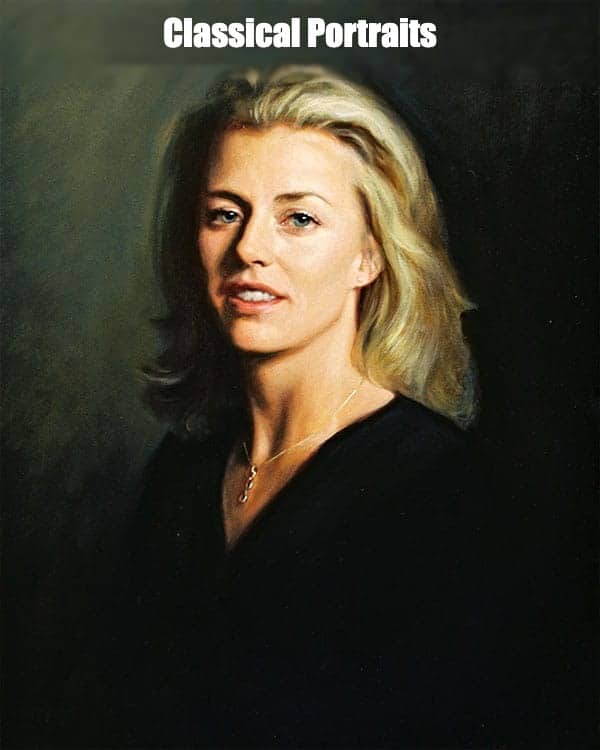
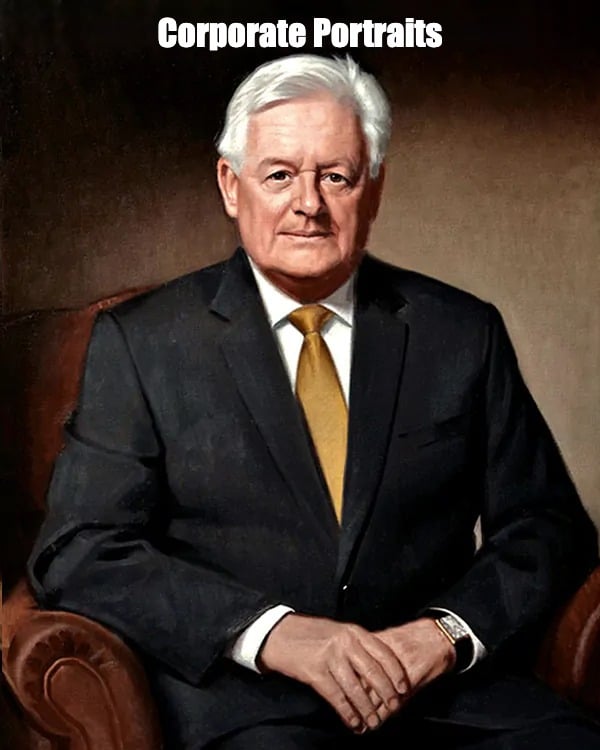
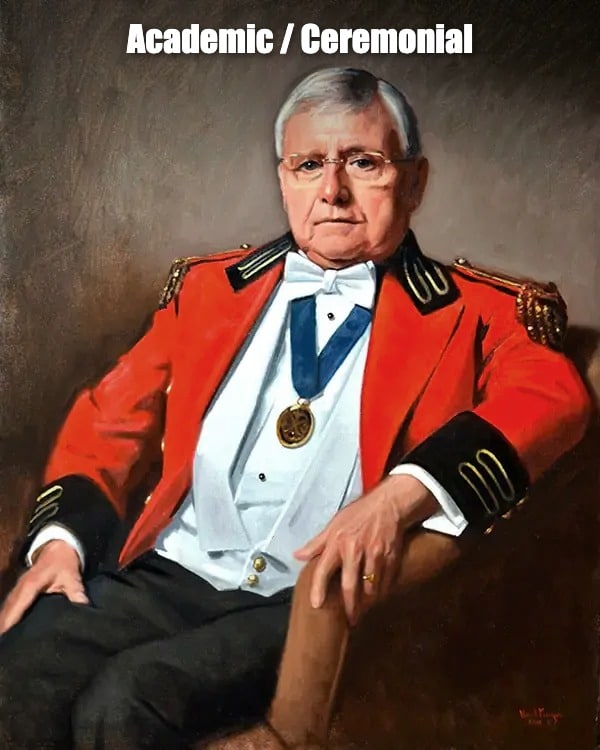
Hazel Morgan is a portrait artist serving clients across Atlanta. With more than 40 years of fine art expertise, she creates hand-painted oil portraits that are treasured as family heirlooms, corporate centrepieces, and lasting memorials. Her work has been commissioned by private collectors, universities, corporations, and public institutions throughout the region.
Clients in Atlanta benefit from Hazel’s established process for working with distant sitters. Whether you prefer to supply photographs or arrange a sitting, every portrait receives the same meticulous attention to detail that has earned Hazel recognition from prestigious art societies on both sides of the Atlantic.
How an Atlanta Commission Works
The first conversation
A complimentary consultation by telephone, video call or email, with no obligation. Hazel talks through the subject, the composition, the size and the room the portrait is going into. Atlanta rooms tend to have tall windows and strong afternoon light, and that usually settles the scale and the tonal key before anything else is decided.
Choosing the photographs
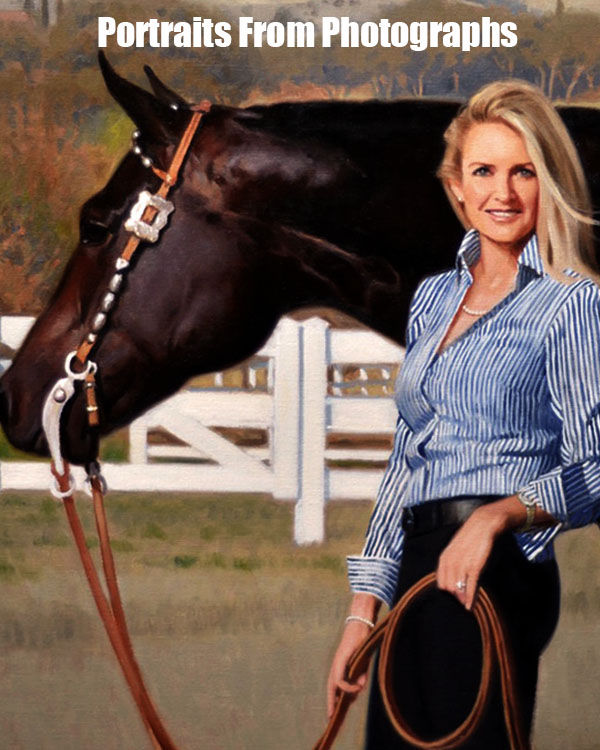
The majority of Hazel's commissions are painted from photographs, and she will tell you exactly what to look for. In Atlanta the usual difficulty is the tree canopy: photographs taken under it in bright sun come back with dappled shadow scattered across the face, which hides the very structure a painter needs. Open shade, or a bright overcast morning, gives far better information. Several photographs can be combined into one painting, and a live sitting can be arranged where practical.
At the easel
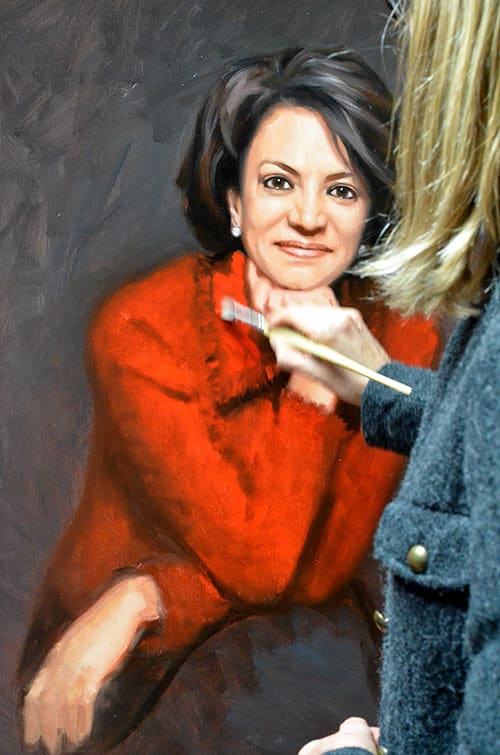
Painting takes six to twelve weeks, depending on complexity. Progress photographs are sent at key stages, so anything you want altered can be altered while it is still easy to do.
Framing and delivery
Finished portraits usually reach Atlanta within one to two weeks of completion. Shipping and framing are quoted once the painting is finished, and Hazel can recommend master framers if you would like the frame chosen to suit the picture.
A City That Chose Its Art Deliberately
Atlanta has an unusually deliberate relationship with the visual arts. Its central arts complex exists because the city lost much of its arts leadership in a single afternoon in 1962 and decided to rebuild in their memory rather than let the work lapse. That is a different history from most American cities, and it shows in how seriously a commissioned painting is still taken here. What Hazel brings to it:
- Over forty years in professional practice, and hundreds of completed commissions for private, corporate and academic clients.
- Work shown at the Royal Society of Portrait Painters and the Royal Institute of Oil Painters.
- The same hand from first sketch to final varnish. You deal with Hazel throughout, never with an agent or a studio assistant.
- Progress images at every stage, and adjustments until the likeness is right.
Questions from Atlanta Clients
Usually not. Most of Hazel's portraits are painted from photographs, which is what makes commissioning from Georgia straightforward. Where a live sitting is practical it can be arranged, but it is rarely necessary.
The process is the same, but the brief is stricter. If the painting is joining an existing collection, send photographs of what already hangs there. Hazel can match the scale, the format and the framing so the new portrait belongs on the wall rather than competing with it.
That is decided by the wall and by how far back people will stand. The most useful thing you can send is a photograph of the room with something of known size in the shot, such as a chair or a door. Hazel advises on size at the consultation.
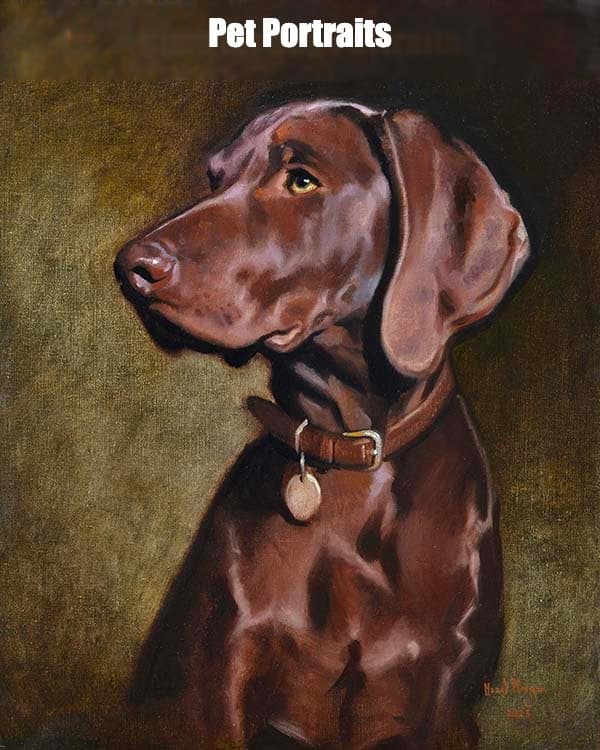
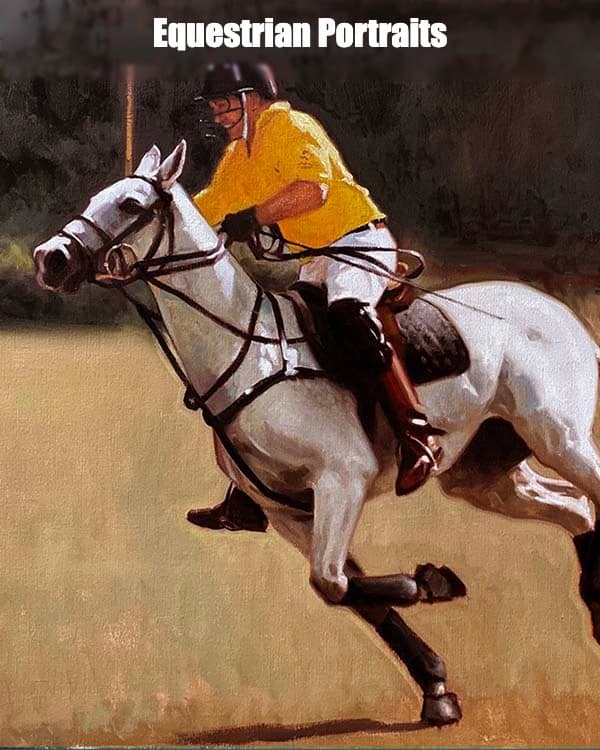
Yes. Equestrian and dog portraits are among the commissions Hazel paints most often, and they are almost always worked from photographs. Take them at the animal's own head height, in soft light, somewhere it is relaxed.
In custom-built crating by insured courier, to the address you give, usually within one to two weeks of completion. Shipping and framing are quoted separately once the painting is complete.
There is more on sittings, sizes and timings on the frequently asked questions page.
Why Hazel Loves Atlanta
Hazel admires Atlanta for its remarkable sense of living history, a quality she finds rare and genuinely moving. The city carries its past with pride while always pressing forward, and that tension between memory and momentum is something she finds deeply resonant as a portrait painter. Walking through the grounds of the Martin Luther King Jr. National Historical Park in Sweet Auburn, Hazel feels the weight of stories that deserve to be seen and remembered — the very impulse that drew her to portraiture in the first place. Atlanta doesn't let its people be forgotten, and neither does she.
Hazel loves the warmth that Atlanta's residents bring to every interaction, and she believes it shows up directly in her work. When a client sits for a portrait, they arrive already open — ready to be known, comfortable sharing something true about themselves. She has painted clients from Inman Park, from Buckhead, from East Atlanta Village, and across all those neighbourhoods she finds the same generous spirit: people who are proud of where they come from and curious about where they're headed. That kind of ease in front of her easel is a genuine gift. It allows her to move past surface appearances and find the quiet, distinctive character that makes each portrait feel unmistakably alive.
Hazel also admires the city's deep commitment to the arts, which she sees woven into everyday life rather than tucked away in formal institutions. The High Museum of Art on Peachtree Road is a place she returns to whenever she visits, not only for its extraordinary collection but for the conversations it sparks — among locals who clearly think of art as something that belongs to them, not just something on display for visitors. That sense of ownership over culture gives Atlanta's creative community a confidence and generosity that she finds endlessly encouraging.
Hazel also loves that Atlanta continues to surprise her. Whether she's discovering a new studio neighborhood or hearing a client recount some unexpected chapter of the city's story, there is always something fresh to absorb and carry back into her painting. For Hazel, Atlanta isn't just a place where she finds clients — it's a place that genuinely deepens her understanding of what it means to capture a human face with honesty and care.
Talk to Hazel About an Atlanta Portrait
The first conversation is free and carries no obligation. Tell Hazel what you have in mind and she will come back to you with a personalised quotation.
Request a Free ConsultationAtlanta Neighbourhoods and Suburbs Hazel's Clients Live In
Buckhead, Tuxedo Park, Peachtree Heights, Haynes Manor, Garden Hills, Chastain Park, West Paces Ferry, Brookhaven, Ansley Park, Morningside, Virginia-Highland, Druid Hills, Inman Park, Candler Park, Lake Claire, Grant Park, Midtown, Old Fourth Ward, Kirkwood, Decatur, Avondale Estates, Vinings, Sandy Springs, Dunwoody, Chamblee, Peachtree Corners, Johns Creek, Alpharetta, Milton, Roswell, Marietta, East Cobb, Smyrna, Kennesaw, Woodstock, Canton, Cumming, Suwanee, Duluth, Braselton, Newnan, Serenbe, Peachtree City, Fayetteville, Tyrone, Stockbridge and McDonough.Orly, the Swan House and the Atlanta Portrait
Atlanta is a city that decided to have an arts district, and the decision has a date. On 3 June 1962 a chartered jet carrying members of the Atlanta Art Association home from a European museum tour crashed on take-off at Orly Field outside Paris. Of the one hundred and thirty people killed, one hundred and six were Atlantans. The city lost a large part of its arts leadership in a single afternoon.
What followed was not a memorial plaque. Robert W. Woodruff, who had run Coca-Cola and who gave away most of his fortune under the name Anonymous Donor, put up the money for a building. The Memorial Arts Center opened in 1968 to house the symphony, the theatre and the art museum together, and it is now the Woodruff Arts Center. Almost every serious painting collection in Atlanta traces back in some way to that afternoon in Paris.
The museum inside it had started much earlier. Harriet High gave her house on Peachtree Street to the Atlanta Art Association in 1926, which is why the High Museum of Art carries her name. Richard Meier designed its white porcelain-panelled building in 1983, and Renzo Piano added three more buildings in 2005. It is the largest art museum in the Southeast, and for anyone who wants to understand how a face is actually painted, its American and European galleries are the most instructive rooms in Georgia.
Atlanta portraiture is not only a museum matter. The Hammonds House Museum in the West End was the home of Dr Otis Thurston Hammonds, a physician who built one of the more significant private collections of African American art anywhere, and it opened as a museum in 1988. The Spelman College Museum of Fine Art is the only museum in the nation devoted to art by and about women of the African diaspora. Morehouse College holds the papers of its most famous graduate, and both campuses keep portrait collections of presidents and benefactors that are still being added to.
The houses matter as much as the institutions. Druid Hills was laid out to a plan by Frederick Law Olmsted, whose firm gave it the chain of linear parks it is still known for. Inman Park, begun in 1889, was the first planned suburb in the city, built out along the streetcar line by Joel Hurt. Ansley Park followed in 1904 with curving streets and deep lawns. Then there is the Swan House, which Philip Trammell Shutze built in 1928 for Edward and Emily Inman on a cotton brokerage fortune, and which now belongs to the Atlanta History Center. Stand in its hall and the case for a painted portrait rather than a photograph makes itself.
The social institutions are older than most people assume. The Capital City Club dates from 1883 and the Piedmont Driving Club from 1887, both founded before Atlanta had any museum at all. Clubs of that age accumulate portraits of past presidents almost as a matter of housekeeping, and a retirement or a change of leadership in Atlanta is still frequently marked with a painting rather than a photograph.
North of the city the character changes. Milton, Alpharetta and the Cherokee County horse farms are hunter-jumper country, with the barns and the paddocks that go with it, and a good horse there is painted with the same seriousness a chairman is. South of the airport the land opens into the older farming counties, where the portraits tend to be family ones that have been hanging for three generations.
What an Atlanta portrait usually asks for, in the end, is warmth without softness. The city keeps its family pictures and does not treat them as decoration, but it also has no patience for flattery. A straight likeness, painted with real attention, hung in a room with light in it. That is a demanding brief, and a satisfying one.
