


Commissioning a Portrait in Phoenix
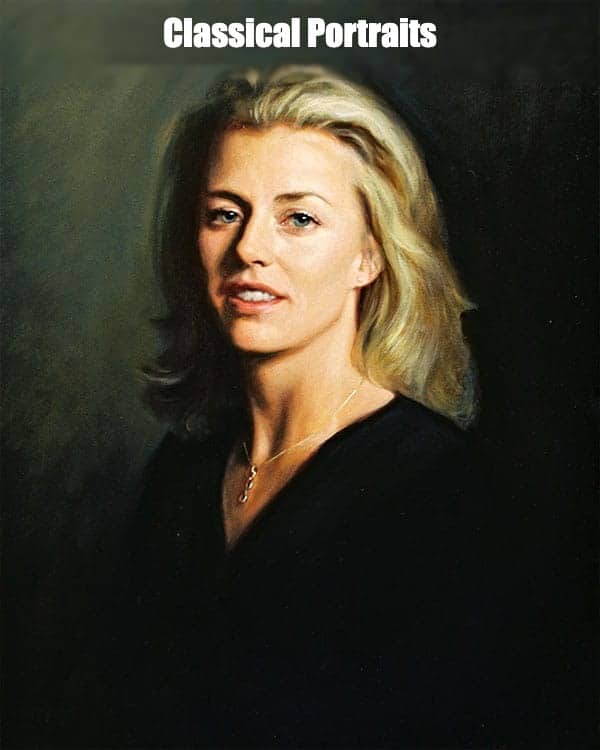
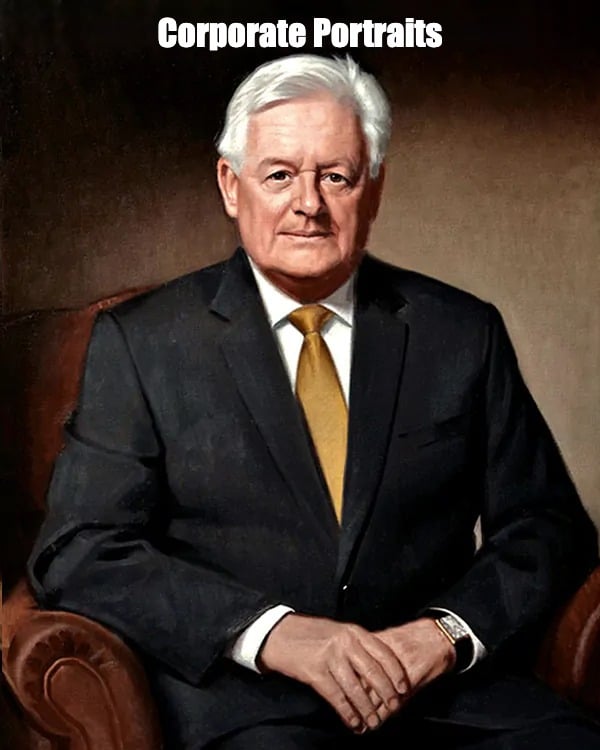
Hazel Morgan is a portrait artist serving clients across Phoenix. With more than 40 years of fine art expertise, she creates hand-painted oil portraits that are treasured as family heirlooms, corporate centrepieces, and lasting memorials. Her work has been commissioned by private collectors, universities, corporations, and public institutions throughout the region.
Clients in Phoenix benefit from Hazel’s established process for working with distant sitters. Whether you prefer to supply photographs or arrange a sitting, every portrait receives the same meticulous attention to detail that has earned Hazel recognition from prestigious art societies on both sides of the Atlantic.
Commissioning a Portrait from Phoenix
The first conversation
Free, and with no obligation attached. Hazel asks who the portrait is of, what it marks, where it will hang and what the light does in that room across a day. In Arizona houses the answer usually involves a good deal of reflected light from pale stucco and stone, which lifts the shadows and changes how the flesh tones have to be mixed.
Photographing in desert light
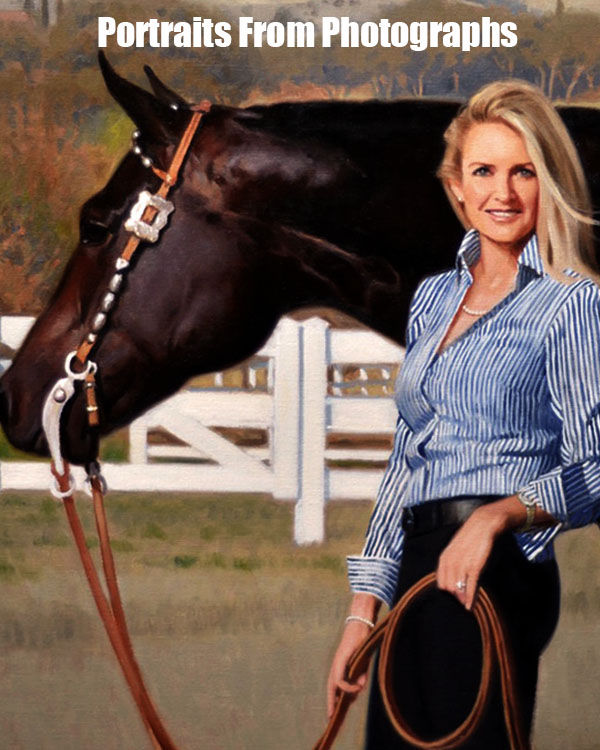
Most of Hazel's portraits are painted from photographs, and the Sonoran desert is the least forgiving light in the country for this. Between about ten and four the sun is almost directly overhead and it carves black holes where the eyes should be. Photograph early, photograph late, or photograph in the shade of a ramada or a courtyard wall. Bounced light off a pale wall is ideal. Several photographs can be combined into one painting, and a sitting can be arranged where practical.
At the easel
Six to twelve weeks depending on the complexity of the picture, with progress photographs sent at the stages where a change is still easy to make.
Framing and delivery
Portraits generally reach Arizona within one to two weeks of completion. Framing and shipping are quoted at that point, and Hazel can recommend framers if you would like the frame chosen for the painting.
Why Phoenix Clients Commission a Painting
The Valley is full of houses built in the last thirty years, and a commissioned portrait is one of the few things that can give a new room the depth of an old one. It is also the only object in the house that will still mean something to someone in eighty years. What Hazel brings to it:
- More than forty years in professional practice, with several hundred commissions behind her.
- Work exhibited with the Royal Society of Portrait Painters and the Royal Institute of Oil Painters.
- One artist from the first drawing to the last brushstroke, with no assistants and no agency between you.
- Progress images as the painting develops, and revisions until the likeness is right.
Questions from Phoenix Clients
It is rarely necessary. Hazel works principally from photographs, which is exactly what makes commissioning from Phoenix straightforward. A live sitting can be arranged where it is practical.
Yes, and it is a frequent request. The important thing is that the background photographs are taken in the same light as the sitter, otherwise the two halves will never sit together convincingly. Hazel will advise on how much setting the composition can take before it starts competing with the face.
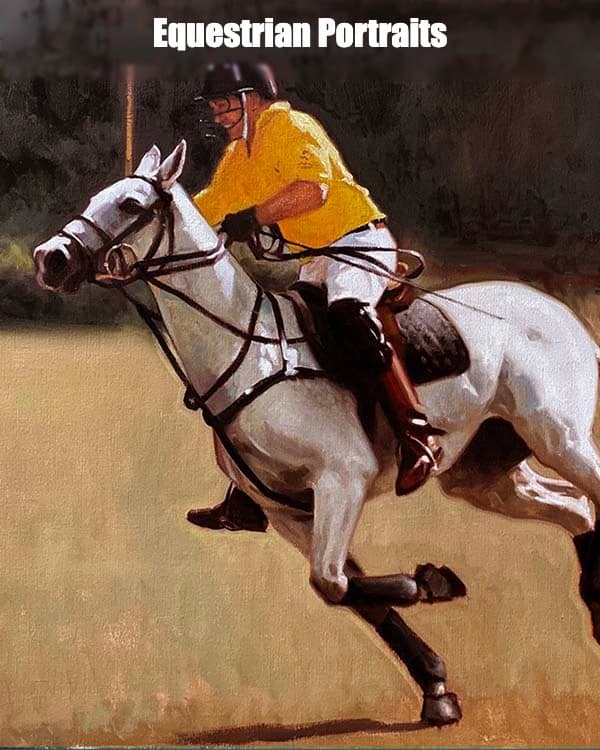
Frequently. Equestrian portraits are among her most common commissions and are almost always painted from photographs. Shoot at the horse's own eye level in early morning light, with the handler nearby, and send more frames than you think necessary.
The wall decides, along with how far back people will stand. Send a photograph of the room with a door or a chair in shot for scale, and Hazel will advise at the consultation.
No. Portraits travel in custom-built crating by insured courier and arrive within one to two weeks of completion. Once hung, the only real precaution in Arizona is the ordinary one: keep an oil painting out of direct sunlight.
More on sittings, sizes and timings is on the frequently asked questions page.
Why Hazel Loves Phoenix
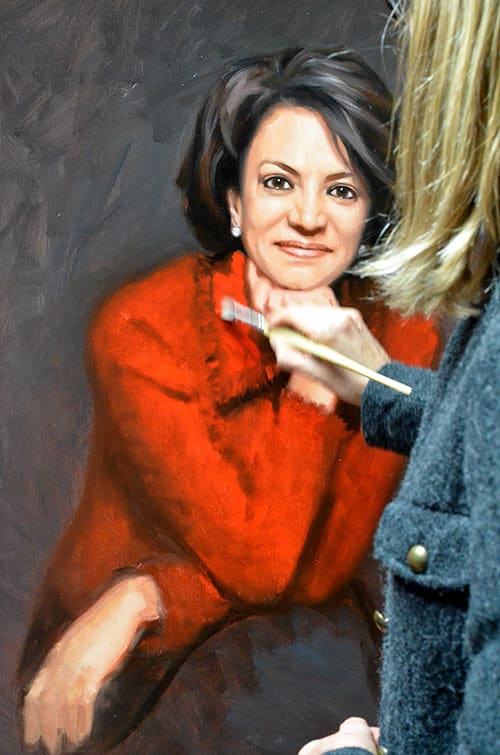
Hazel admires Phoenix for its extraordinary light. The way the Sonoran Desert sun falls across a face in the late afternoon — warm, golden, and almost painterly in itself — is something she finds endlessly inspiring. There is a quality to the Phoenix sky that feels almost cinematic, and it shapes the way she thinks about shadow, tone, and the subtle warmth she brings to every portrait she creates. She has often said that painting someone in Phoenix feels like working with the city as a quiet collaborator, as though the landscape itself is lending a hand.
Hazel loves the people she meets through her portrait work here, and she means that genuinely. Phoenix draws an wonderfully eclectic mix of individuals — long-rooted families with deep ties to Arizona's history, artists and creatives drawn to the thriving scene around the Heard Museum, and newcomers who arrived for the sun and stayed for the soul of the place. Sitting with a client for a portrait commission means spending real time together, and Hazel has found that Phoenix residents bring an openness and warmth to that experience that she treasures. They share stories freely, they laugh easily, and they carry a quiet pride in where they live — all of which she tries to capture in the finished work.
Hazel also admires the creative energy of neighbourhoods like Roosevelt Row, where murals and independent galleries remind her that art here is genuinely woven into everyday life rather than set apart from it. Walking through that part of the city before a commission session has a way of sharpening her eye and loosening her instincts. She finds herself noticing faces differently — the way someone carries themselves, the character etched into an expression — and that heightened attention follows her back to the studio and directly into her brushwork.
Hazel also loves how much history and natural wonder sit so close to the surface of Phoenix life. A short drive brings you to South Mountain Park, where the scale of the landscape puts everything beautifully in perspective. For a portrait painter, that sense of perspective — of understanding how small and how remarkable a single human face can be at the same time — is genuinely nourishing. Phoenix keeps reminding her of that, and she keeps coming back for it.
Talk to Hazel About a Phoenix Portrait
The first conversation is free and carries no obligation. Tell Hazel what you have in mind and she will come back with a quotation for your commission.
Request a Free ConsultationValley Neighbourhoods and Towns Hazel's Clients Live In
Paradise Valley, Arcadia, Biltmore Estates, Camelback East, Encanto, Willo, Coronado, Central Corridor, Ahwatukee, Moon Valley, Desert Ridge, Old Town Scottsdale, McCormick Ranch, Gainey Ranch, Silverleaf, DC Ranch, Grayhawk, Desert Mountain, Troon, Pinnacle Peak, Carefree, Cave Creek, Rio Verde, Fountain Hills, Mesa, Gilbert, Chandler, Ocotillo, Tempe, Sun Lakes, Litchfield Park, Peoria, Glendale, Surprise, Goodyear, Buckeye, Anthem, New River, Wickenburg, Prescott, Sedona, Oro Valley and Tucson.Cowboy Artists, the Heard and the Phoenix Portrait
Phoenix has a more serious art history than its newness suggests, and it begins with two sisters-in-law and a road trip. Dwight and Maie Heard came to the Salt River Valley in 1895 for Dwight's health, made a fortune in land and cattle, and Maie spent decades collecting the art of the Southwest. The Heard Museum opened in 1929 to hold it, and it is now among the most important museums of Native American art anywhere. Its portrait holdings are worth a long look, because they raise a question every portrait painter has to answer: whether a likeness is a record of a face or an account of a person's place in a community.
The Phoenix Art Museum came later, opening in 1959, and it holds American, European, Asian and Latin American collections along with a fashion design department. What matters for anyone commissioning a portrait here is its American and Western galleries, where you can see how the painters who invented the visual language of the West handled a human head when they were not painting cattle.
That Western tradition has a specific local root. The Cowboy Artists of America was founded in 1965 at a bar in Sedona by a group of painters who thought the West was being sentimentalised, and Phoenix became the centre of the market for their work. It produced a regional expectation that a painting should be accurate before it is flattering: that a horse should be anatomically right, a hat should sit as hats actually sit, and a weathered face should be painted weathered. That is an excellent tradition for a portrait client to have inherited.
Scottsdale turned that market into an industry. Its Main Street and Marshall Way galleries have run the Thursday evening ArtWalk continuously since 1975, one of the longest-running weekly art events in the United States, and Scottsdale's Museum of the West opened in 2015 to give the whole Western tradition a permanent home. There are few American cities where more art changes hands per resident.
The architecture is the other half of the story, and it shapes every commission here. Frank Lloyd Wright built Taliesin West in the McDowell foothills from 1937 and spent his winters there until his death, and his influence runs through the Valley: low horizontals, deep shade, desert masonry, rooms planned around where the sun will be. Paolo Soleri's Cosanti is in Paradise Valley. Wright also drew the Biltmore Hotel's distinctive concrete blocks. A portrait hung in a house built on those principles has to work with strong ambient light coming off pale surfaces from several directions at once, which is a genuinely different problem from a portrait lit by one north window in an older city.
North and east of the suburbs the land turns to horse country. Scottsdale has hosted the Arabian Horse Show every February since 1955, and it has made the city one of the centres of Arabian breeding worldwide. Wickenburg keeps the working ranch tradition and the dude ranches that grew out of it. The equestrian commissions that come from those communities are placed by people who know precisely what they are looking at, which raises the standard in the best way.
What a Phoenix portrait usually needs is light and air. Not the dark studio tonality of a nineteenth-century English portrait, but something cleaner and higher-keyed, painted to hold its own in a bright room with pale walls. Get that right and the painting looks as though the house was built around it.
